
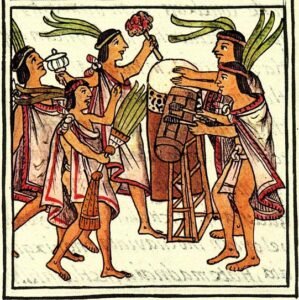
Flight of the Hummingbird is a historical novel by Salomón Quintero that takes readers deep into the world of the Mexica civilization. Set against the grandeur of Tenochtitlán and the dramatic final years of the Fifth Sun, the novel combines family, ambition, art, politics, philosophy, and history into a compelling story of a civilization approaching an extraordinary moment of change.
The novel follows Huitzilin, whose name means “the Hummingbird,” as he rises from a family rooted in the chinampas of Tenochtitlán to become a trusted adviser to Emperor Moctezuma II. Through his journey, readers experience the Mexica world from within rather than simply viewing it through the lens of its eventual conquest.
A Story Set in the Mexica World
At the heart of Flight of the Hummingbird is the story of one Mexica family across four generations. Their journey reflects the opportunities, challenges, ambitions, and cultural achievements of the society around them.
Huitzilin’s father becomes a respected jeweler and philosopher-artist. His brother builds a successful career as a merchant, while his sister becomes a talented feather artist. Huitzilin takes a different path. He enters the prestigious Calmecac school, develops relationships with members of the ruling elite, and eventually advances through war, diplomacy, and statecraft.
His journey ultimately brings him into the inner circle of power, where he becomes chief adviser to Emperor Moctezuma II.
This family-centered approach gives the novel a personal dimension. Instead of presenting history only through kings, battles, and political events, Flight of the Hummingbird explores how major historical changes affect ordinary ambitions, family relationships, careers, and individual dreams.
Huitzilin and the Meaning of the Hummingbird
Huitzilin is the central figure of the novel, and his journey represents movement, ambition, transformation, and survival.
His rise demonstrates the importance of individual ability in a society often portrayed as rigid and unchanging. The author explains that the novel grew from a question about social mobility in Aztec society. His research led him toward a more dynamic understanding of the Mexica world, where talented and ambitious individuals could find opportunities to advance.
Huitzilin’s story therefore becomes more than a historical adventure. It is also a story about the human desire to learn, achieve, build, and improve one’s position in the world.
His experiences in education, politics, diplomacy, and leadership allow readers to see how personal ambition can interact with a complex social and political system.
Tenochtitlán: A Civilization at Its Height
One of the fascinating aspects of Flight of the Hummingbird is its portrayal of the Mexica world at a time when Tenochtitlán represented extraordinary power and cultural achievement.
The novel invites readers to imagine the city not merely as a historical location but as a living environment filled with artists, merchants, warriors, scholars, rulers, and families.
The family at the center of the story participates in different aspects of Mexica society. Jewelry, commerce, feather artistry, education, warfare, diplomacy, and government all become part of the narrative.
This broad perspective helps create a picture of a sophisticated civilization with diverse professions, social ambitions, artistic traditions, and intellectual life.
Art, Philosophy, and Culture
Art plays an important role in the story. Huitzilin’s father is a jeweler and philosopher-artist, while his sister is a renowned feather artist. These characters demonstrate that creativity and craftsmanship were closely connected to the cultural identity of the Mexica world.
The novel also explores ideas about poetry, mortality, memory, and the meaning of human existence. These themes make the story relevant beyond its historical setting.
The world of the novel is not simply about political power. It is also about how people understand beauty, life, death, memory, identity, and their place within a larger civilization.
The Shadow of the Fifth Sun
As Huitzilin’s family reaches the height of its success, the atmosphere begins to change.
Omens appear in the sky, uncertainty spreads, and rumors begin to circulate about mysterious strangers arriving from the eastern sea. The world Huitzilin has spent his life helping to strengthen is suddenly confronted with an unfamiliar and potentially devastating force.
This creates the central tension of the story.
Readers know that the Mexica civilization is approaching a historical turning point, but the characters experience these events without the benefit of hindsight. For them, the future is uncertain.
The result is a powerful contrast between confidence and uncertainty: a civilization can appear strong and prosperous while still standing on the edge of profound transformation.
History Through a Human Perspective
One of the major strengths of Flight of the Hummingbird is its attempt to restore a human dimension to Mexica history.
Historical accounts often focus on conquest, rulers, battles, and political events. A historical novel can approach the same period differently by asking what people thought, feared, desired, and dreamed about.
Through Huitzilin and his family, readers can consider the human experiences behind historical events.
What does it mean to build a successful life? How does ambition shape a person’s choices? What happens when a society’s future suddenly becomes uncertain? How do families preserve their identity when their world is changing?
These questions give the novel significance beyond its historical setting.
Why Read Flight of the Hummingbird?
Readers interested in Aztec history, Mexica culture, historical fiction, ancient civilizations, and stories about political transformation may find Flight of the Hummingbird especially compelling.
The novel offers several layers to explore. It is a family story, a political story, a cultural story, and a historical drama. It combines personal ambition with the rise and eventual crisis of a civilization.
It also challenges simplified ideas about the Mexica social structure by focusing on individuals who pursue education, wealth, artistic excellence, influence, and social advancement.
For readers who enjoy historical novels that place characters inside major historical events, this perspective can make the past feel more immediate and personal.
A Journey Through a Vanishing World
The title Flight of the Hummingbird captures the sense of movement that runs throughout the novel. Huitzilin’s life moves from humble beginnings toward political influence, while the civilization around him moves toward an uncertain future.
The hummingbird can also evoke energy, beauty, movement, and fragility—qualities that fit a story in which personal achievement and cultural brilliance exist alongside the possibility of sudden destruction.
As the Fifth Sun approaches its prophesied end, the novel asks readers to consider what remains when a civilization faces forces beyond its control.
Discover Flight of the Hummingbird
Flight of the Hummingbird by Salomón Quintero offers an immersive journey into the Mexica world through the life of Huitzilin and his family. From the chinampas of Tenochtitlán to the chambers of imperial power, the story explores ambition, art, education, diplomacy, family, culture, and the uncertain future of a great civilization.
If you are looking for a historical novel that explores the Aztec world from within, this book provides an opportunity to experience the Mexica civilization through the eyes of people who lived, worked, dreamed, and struggled within it.
Buy Flight of the Hummingbird and begin the journey into Huitzilin’s world.